
How Medical AI
Is Trained, and
Who Trains It
Who taught the AI to read a chest CT?
A radiologist did, and they were paid for it. That work has a name.
Licensed clinicians · Defined projects · Paid per approved unit

Credentialed domain experts registered on OneForma
Expert domains, with medicine among the fastest-growing
Countries where credentialed experts take on projects
Experts accepted daily across every domain

The short answer
Medical AI Does Not Learn Medicine on Its Own.
It learns from clinicians who read its output, mark what is wrong, and explain why. That contribution is called Human Intelligence work.
It is done by physicians, nurses, pharmacists, radiographers and therapists, on defined projects, and it is paid.
If you hold a clinical license, you may be eligible for projects in your field.
Why a Model Cannot Learn Medicine by Reading
Clinical judgment is not captured by published data alone.
A large model can process extensive medical literature in your specialty. It still has no way to know which of them a careful clinician would ignore.
That is the part people find surprising. Medical AI is not limited by how much text it has seen. It is limited by judgment: knowing that a result is technically within range and still wrong for this patient, or that a phrase in a note means something different in one hospital than another.
Three Problems a Model Cannot Resolve Alone
Plausible errors
A wrong answer delivered with complete confidence is the failure mode that matters. Catching it needs someone who has practiced, because it reads as correct to everyone else.
Context that never got written down
The reason a colleague always orders one more test before signing off. The way a patient minimizes symptoms. None of it is in the literature.
Disagreement between experts
Where two specialists would reasonably differ, a model needs to be taught that the question is genuinely open, not given one answer and told it is settled.

What to Expect
How the Work Happens
Human Intelligence work in medicine follows the same shape across most projects.

Project qualification
You confirm your license and specialty, then complete a short assessment for the specific project. Different projects have different gates: some require board certification, some require in-country practice.
Guidelines
Every project comes with written guidelines that define what a correct answer looks like. Reading them is part of the paid time.
Review
You are shown model output in your own field: a draft report, a suggested diagnosis, a summarized note. You judge it.
Explanation
This is the part that carries the value. You record what is wrong and why. A flag on its own teaches a model almost nothing. A flag with a clinical reason teaches it a great deal.
Agreement Checks
On many projects several specialists review the same item. Where you disagree, that disagreement is itself the finding, and it often triggers a calibration round before the project scales.
Payment
You are paid per approved unit, twice monthly, by PayPal or Payoneer.
Where This Shows Up in Medicine
Medical AI is not one thing, and the expertise it needs changes by field.
Imaging
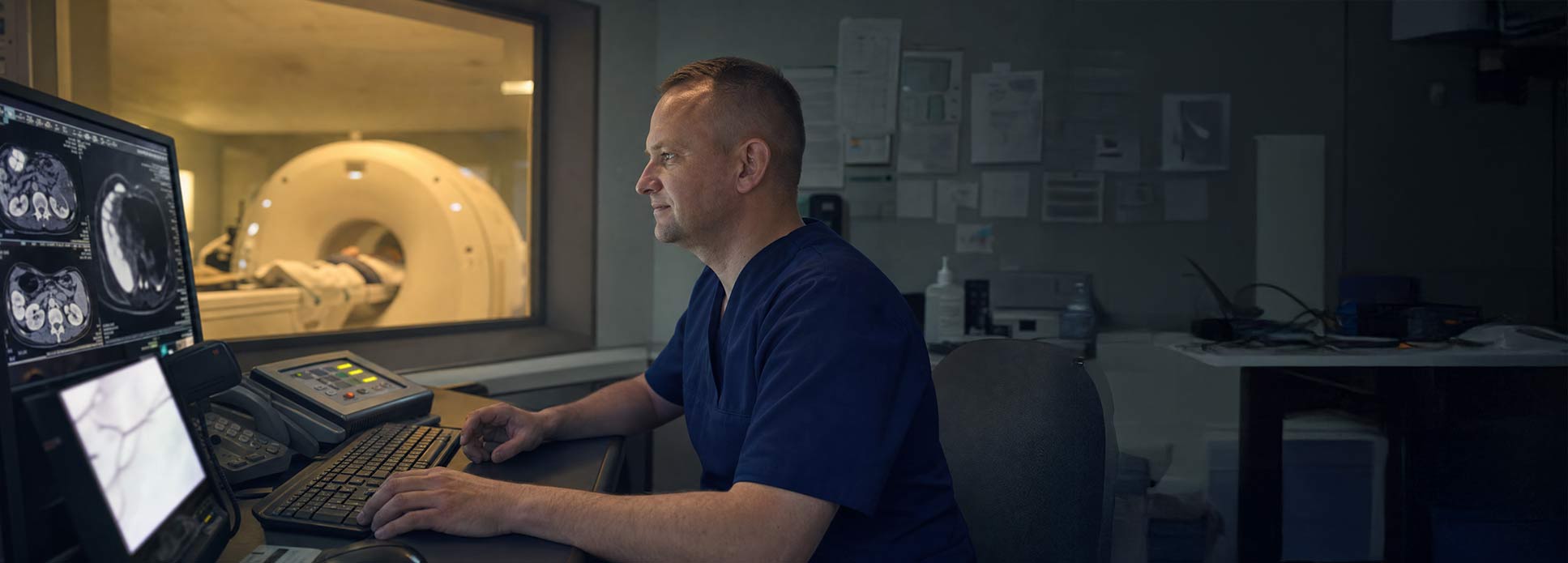
Draft reports on CT, MRI, X-ray and ultrasound need reading by someone who reports for a living. This is where the phrase AI in medical imaging usually points.
Clinical documentation
Ambient scribes and summarizers produce notes that read fluently and sometimes lose the thing that mattered. Catching that is a clinician’s task.
Decision support
Triage prompts, risk scores and dosing suggestions are checked against how care is delivered, not how a guideline reads.
Medication safety
Interaction and dosing checks are reviewed by pharmacists, who catch what prescribers and models both miss.
Patient-facing language
Whether an explanation is accurate is one question. Whether a worried person will understand it is a different one. Nurses bring essential patient-facing context to whether an explanation is understandable.
Who Takes Part
Not only physicians. The projects that need the widest range of input are the ones closest to the bedside.
There are 12,000 credentialed domain experts registered on OneForma. Medical is one of the fastest-growing groups within that.



Questions People Ask.
How is medical AI trained?
On published literature and clinical data first, then on correction. Clinicians review what the model produces, mark what is wrong, and record the clinical reason. That correction layer is what turns a fluent model into a usable one, and it is the part that needs licensed people.
Do I need experience with AI?
No. Your clinical expertise is the qualification. Every project supplies written guidelines that define what a correct answer looks like, and reading them is part of the paid time.
How much time does it take?
You take the projects you want, when you want them. There is no minimum commitment and nothing owed between projects.
Is my license required?
For most medical projects, yes. You confirm your license and specialty at qualification. Some projects add gates on top: board certification, or current in-country practice.
Does this replace clinicians?
The opposite. These projects exist because the models cannot resolve clinical judgment on their own. This is not clinical practice: you are not treating patients and you are not taking clinical responsibility for care.
What does it pay?
You are paid per approved unit, twice monthly, by PayPal or Payoneer. Rates are set per project and shown before you accept.
Explore opportunities in your specialty. Confirm your license, review the project requirements, and apply for the ones that fit.